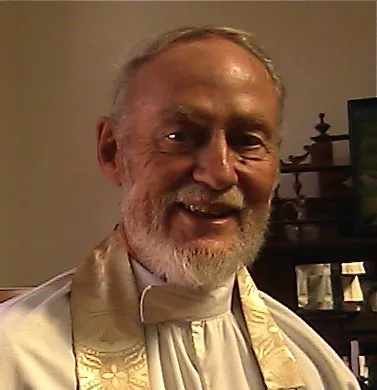
Writing in the ACNA’s Convocation of the West publication The Line (Volume XIII, Number 7 — July 2026) Bishop Winfield Mott reflects on the history of the Convocation within ACNA. He sounds dejected about what has become of ACNA. He writes in part:
For us in the Convocation of the West, our Alpha was in 1990. The catalyst was some drastic change for the worse within the Episcopal Church, leaving many without a spiritual home as ECUSA headed for apostasy. Among the dynamic responses to the new reality was the beginning of the Anglican Diocese of the West by Bishop Richard Boyce. It was an humble beginning, gathering a small community of orthodox believers in the Seattle area. The new Diocese navigated the quite dynamic, fluid world of “continuing Anglicanism,” eventually becoming a diocese of the Anglican Province of America around the turn of the new millennium.
As new waves of spiritual “refugees” exited the Episcopal Church in the early years of the 21st Century, some world Anglican leaders, led by Primate Peter Akinola of Nigeria, strongly encouraged American Anglicans to organize a unified province, as one of the three dozen or so Anglican provinces around the world. This led to the formation of the Common Cause Partners, a coalition of dioceses and other groups to achieve the goal. Bishop Boyce, with his strong desire for a united orthodox Anglicanism, joined the CCP and the Diocese became an organizing partner.
The CCP formed the Anglican Church in North America in 2009. The Diocese of the West was a founding diocese, the only diocese in the Continuum to join ACNA. Because of our small size, we were asked to join through the mechanism of becoming a diocese of the Reformed Episcopal Church. Nevertheless, the Diocese had equal status and representation in the ACNA legislative bodies. Those were heady days. With enthusiasm, many of us believed that the ACNA could actually be the vehicle to bring “the transforming love of Jesus Christ” to North America, the long-awaited answer to our prayers for our beloved but deeply troubled nation.
[…]
Seventeen years later, the enthusiasm is noticeably missing among us. The barriers Metropolitan Jonah identified are all still firmly in place, except for the small step of making the filioque optional in the 2019 BCP. Ecumenical progress has therefore stalled, North America’s transformation is nowhere in sight, the contradiction of “dual integrity” remains entrenched while theological integrity escapes our grasp, replaced by endless issues around gender and sex, scandals and juridical processes. It kind of resembles TEC, only from a different perspective.
Although the ACNA seems to have settled into a niche as a small, conservative, mostly unnoticed denomination, it is nevertheless important to remember many thousands of sincere Christians remain part of it, quietly keeping on as faithful communicants. The Diocese of the West formed a small part of that demographic. It comprised about seventeen small congregations in seven Western states. The clergy and bishops were mostly volunteers. It rarely had pastoral vacancies and always had money in the bank. Bishop Boyce, as founder and bishop ordinary for 21 years, left his mark on the “spirit” of the Diocese, an orthodox Faith rooted in Scripture and Tradition, always administered with a pastoral compassion.
There was never a clutter of structures and rules, nor dispute and dissention. Annual synod meetings took less than an hour, with the rest of the synod devoted to education, sharing, worship and enjoyment. In later years, the Mesilla Clericus (my recollection is that it started in 2012) soon gained a very meaningful place in our hearts, serving as a model of how to be a diocesan community together.
But, like the message of the song “Puff the Magic Dragon,” some changes produce sadness more than progress. By 2016, the ACNA had no interest in the model of a small diocese based on compassionate orthodoxy. New rules required instead that a diocese must have a minimum of 12 congregations with an ASA of 50 each, and a diocesan total of 1000. Upon my own retirement as DOW bishop ordinary in 2016, no new election for bishop was authorized and the Diocese was eliminated, despite being solvent, fully supplied with clergy and a distinct community within both REC and ACNA. The concept of a diocese small enough for the bishop to be a genuine shepherd is ancient and well tested. Its model is epitomized in the Diocese of Ephesus towards the end of the First Century, where Bishop John oversaw seven congregations, knowing the flock well and able to identify their strengths and weaknesses in order to give them well informed pastoral care. The ACNA has rejected this model and prefers the TEC model, where diocesan viability is defined as being able to support a bishop with a fulltime salary compatible with being a senior administrator. Thus, the necessity for enough congregations and paying members to achieve that goal becomes essential. There was no room in ACNA for an humble diocese such as ours.
Our community searched for a new home, ultimately becoming a convocation within the Missionary Diocese of All Saints. MDAS was chosen because it was an Anglo-Catholic affinity diocese able to receive all our congregations without geographic limits and because it was structured to accommodate communities such as ours as convocations. We were graciously accepted into MDAS as the Convocation of the West and for another decade were able to continue the heritage received from Bishop Boyce.
However, in the dynamic of life, change has again come upon us. Another vision by a new bishop is going in a different direction in an effort to make the Diocese more efficient. Once again, we are being eliminated. Our Vicar-General, who was able to continue the same personal pastoral relationship with the flock over the last decade, is retiring with honor.
Leave a Reply