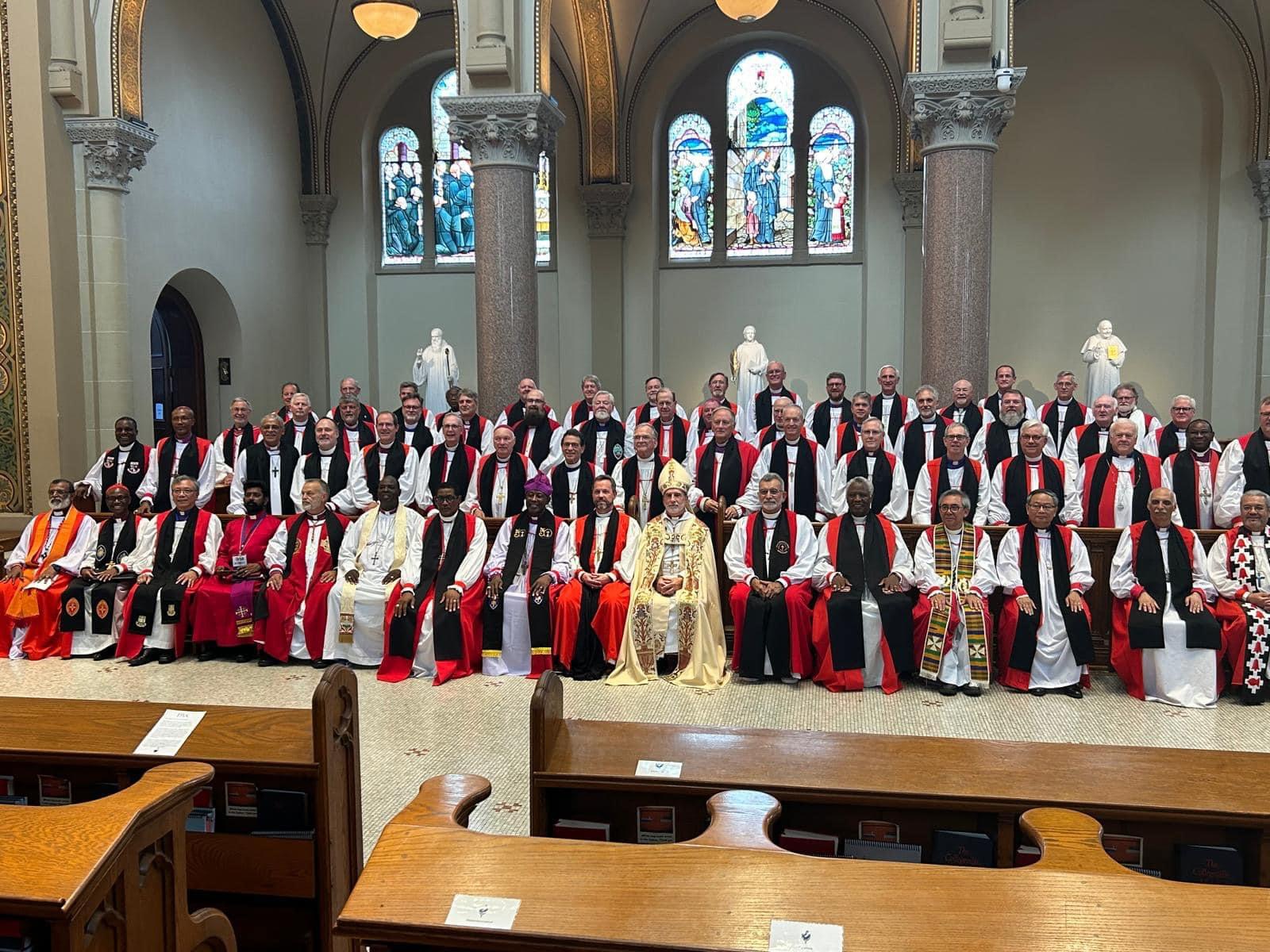
Yesterday, ACNA’s bishops said they are ashamed for how chaplains have been treated over the past years. They did not name names, but at least four bishops are under investigation. They have not issued a similar apology to the many mistreated in the Ruch case or many other cases, but that’s to be expected.
On X, Anglican chaplain Lance Lormand discussed the ACNA’s use of NDAs in the chaplain’s case:
Actually we did get NDAs. I’ll post them below. They include a perpetual gag order and a destruction clause but we did not sign them and told them we never would. They have since said they will revise them so that they only exist to protect investigators for the period of the investigation. We do not intend to sue as that is not how we do things, but it’s a shame that you have to maintain the threat of legal action for them to do anything.
Here is the text of the NDA proposed to Rev. Lormand:
Investigation Confidentiality Agreement
I understand that it is the policy of the Anglican Church in North America that participants in an investigation maintain the confidentiality of the investigation, including the identity of participants in the process, procedures, and findings.
It is my commitment, as a participant in an episcopal investigation within the Anglican Church in North America, to help ensure a just and safe process by entering into the following Confidentiality Agreement.
I will not disclose my own participation, or the name of other participants in this process, to anyone, including my bishop, not participating in this investigation and subject to a similar Confidentiality Agreement unless granted permission to do so by the Provincial Chancellor.
I will not disclose to anyone, including my bishop, not participating in this investigation any information learned or discovered through the investigation about any participant in the investigation, including any accused, accuser, alleged victim, or witness. In particular, I will not share any personal data of any party named in the investigation. Personal data includes any information that could lead to an individual being directly or indirectly identified, including, but not limited to names, addresses, images, church affiliation, and location.
I understand that written communications in any form sent or received to or by any party to this investigation, including any investigator, accused, accuser, alleged victim or witness within the scope of this investigation is confidential. I will not duplicate any such communication, physically, digitally or in any other manner. I will not share any such communication with any party outside the investigative process. I agree to destroy any personal copies of any such communication at the conclusion of the investigation. This provision does not limit my privileged and confidential communications with my priest, named chaplains or legal counsel nor does it restrict privileged conversations, such as with a mental health provider.
While it is understood that emotional and social support may need to be sought, verbal communication of investigative details must be kept private and will not be shared publicly in oral or written form or through any form of social media or press.
During the investigation, I will not contact any party involved in the investigation, including any accuser, accused, alleged victim or witness, except in my official capacity as a member of the investigation team. I will not contact any member of the staff of the Province on matters pertaining to the investigation apart from the Safeguarding Office. I agree that all communications or questions about the investigative process should be directed to [redacted]
I understand that my violation of this Agreement may put other parties at risk and hinder the investigative process. In addition, I understand that violation of this Confidentiality Agreement may make me liable for possible canonical discipline.
This Confidentiality Agreement will be effective from the date set forth below and shall continue indefinitely including after the conclusion of the investigation.
I asked Gemini to evaluate the NDA and it said, “…binding participants to permanent silence regarding the findings and mandating the destruction of documents, the agreement fundamentally safeguards the institution against external scrutiny, public accountability, and long-term public fallout.”
I ran a further AI analysis of the NDA versus Federal Rule of Civil Procedure 37(e) and found:
Directing parties to destroy contemporaneous written communications generated during an inquiry into alleged misconduct directly undermines evidence preservation.
By barring duplication and compelling participants to destroy personal copies, the institution positions itself as the sole surviving custodian of the written record. In civil discovery, this deprives complaining parties and witnesses of their own contemporaneous records, forcing them to rely entirely on what the institution decides to produce from its internal archives.
The agreement contains a sweeping prohibition: “I will not disclose to anyone, including my bishop, not participating in this investigation any information learned or discovered through the investigation about any participant… including, but not limited to names, addresses, images, church affiliation, and location.” While it carves out privileged disclosures to attorneys, therapists, and personal priests, it omits any carve-out for reporting crimes to law enforcement, protective services, or regulatory authorities.
In U.S. contract law, non-disclosure agreements that suppress, penalize, or chill the reporting of unlawful conduct or statutory child abuse to civil authorities are generally void and unenforceable as a matter of public policy. Even if the drafters did not intend to block criminal reports, the absence of an explicit law enforcement safe harbor creates a chilling effect on participants who may fear contractual breach.
Under Rule 3.4(a), a lawyer shall not “unlawfully obstruct another party’s access to evidence or unlawfully alter, destroy or conceal a document or other material having potential evidentiary value.” An attorney counseling an institution cannot ethically advise or require witnesses and potential adverse parties to destroy personal copies of relevant communications.
Standard legal agreements routinely include a “compelled disclosure” clause, which specifies that disclosing information pursuant to a court order, subpoena, or lawful government inquiry does not constitute a breach. By omitting this standard exception and pairing the indefinite duration with ecclesiastical penalties, the document creates a misleading impression that complying with civil discovery or testifying in a legal proceeding could trigger canonical charges.
Of course the ACNA is not bound by this Federal rule, but it illustrates the governing mentality and how far it is from helping victims, while aligning with institutional preservation. As Rev. Lormand says, “They have since said they will revise them so that they only exist to protect investigators for the period of the investigation.” But there isn’t much basis for confidence in what will result.
Leave a Reply