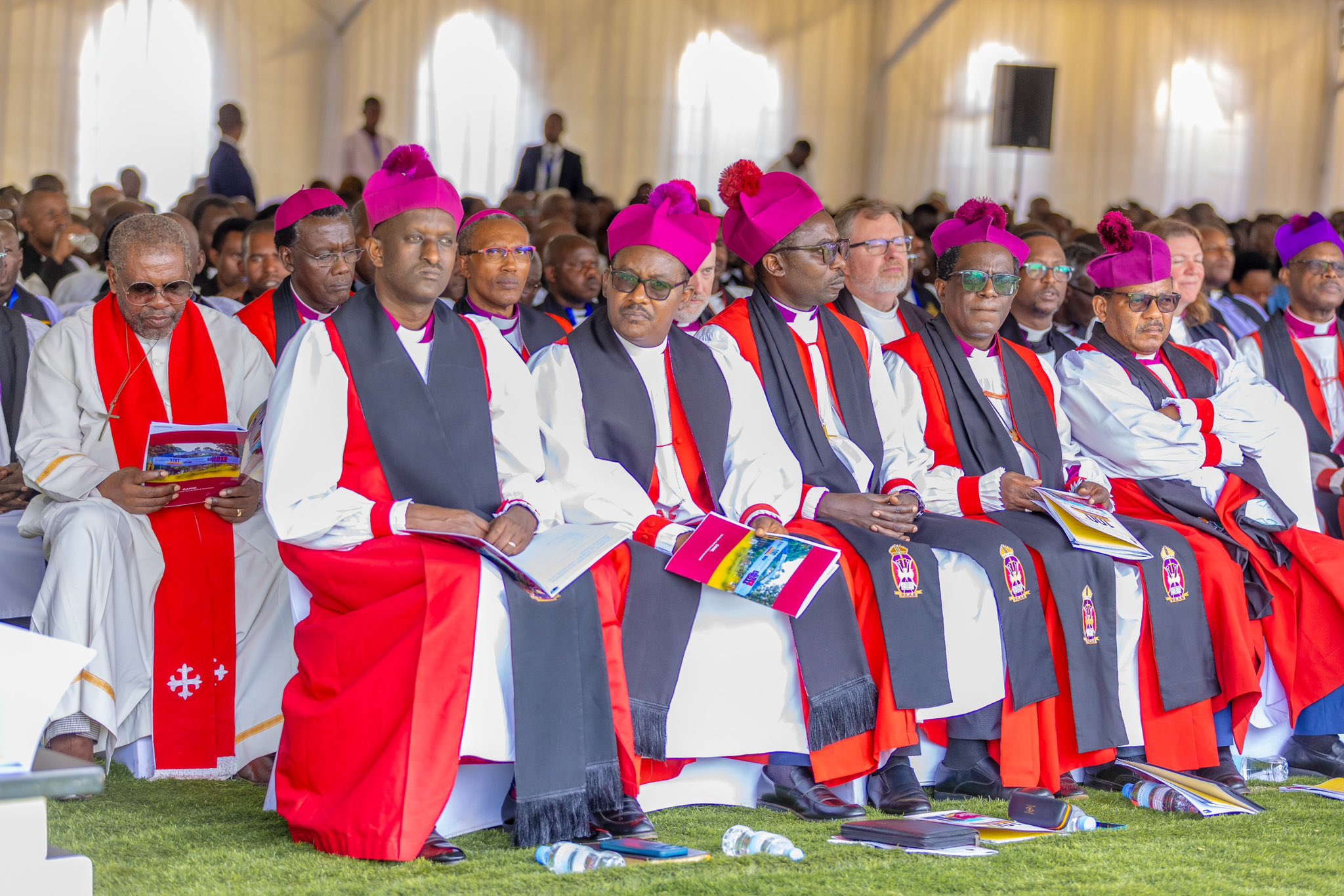
In contrast to many naive Western thoughts about the state of the church in Rwanda, Adriaan Verwijs provided his account of time spent there in the Cairo Journal of Theology in 2015. His article is Growing in Christ on African Soil: Thoughts on Enhancing the Contextualization of Discipleship Training in Rwanda and I will quote some of it below.
When I first arrived in Rwanda, a minority of the population seemed to attend church service on Sundays. I heard about intellectuals who had left the church. An alternative to church going was apparent in Kigali around 2009 when every Sunday morning a few thousand people would go out to jog and chant songs together. It seemed obvious to me that the role of the Church and religion had diminished in society. The media brought new concepts in opposition to the teachings of the Church, and young Christians started to ask us about those new ideas. […] From a Western point of view, I observed signs of a process of secularization and religious decline.
The Anglican Church of Rwanda was far less mission-minded than I thought it would be. Preparing myself to go to Rwanda, I read about the East-African Revival, about the many converts, and about how widespread the Revival was. The fire of the Revival, however, was not burning anymore, and there was little focus on mission. Perhaps the vision for mission had faded away when the unity that characterized the Revival disappeared. No doubt the vision for mission was further blurred later by the genocide.
Verwijs mentions nepotism in the church:
In 2012 I finished my master’s studies at the Business School of the York St John University with a dissertation on the promotion of church leaders in the Kigali diocese of the Anglican Church of Rwanda. In my research I interviewed five leaders. Every leader but one said that nepotism formed one of the biggest problems within the Anglican Church. Nepotism in Rwanda is connected to the Rwandan concept of the Akazu.
The Akazu (literally, small house) is a small group of loyal people, mainly family members. “The Akazu, was at the center of the circles of power in Rwanda,” says Michel Bagaragaza. The Akazu is suspected of having taken a leading role in the organization of the Rwandan genocide. The same principle was visible in the Anglican Church. When some of our pastors only went through a brief training of two weeks before being ordained, the bishop presented them anyway. They had to be accepted as candidates for ordination because they were directly connected to the ecclesiastical Akazu.
He also discusses ethnic problems within the church:
Another possible aspect of secularization is the tension between the ethnic groups in Rwanda. My research for the master thesis “Leading Innovation and Change” (from the years 2011–2012) revealed a significant difference between Kigali and rural areas by looking at the background of the deacons and pastors and at their formal education. While over 90 percent of the church leaders in rural areas are Hutu, the majority of church leaders in Kigali City are Tutsi.
Not one of the pastors and deacons of Kigali had formerly worked as a catechist, while all of them finished secondary school and over 50 percent hold certificates of higher education. In the rural areas, most pastors began their careers as catechists before being promoted to being pastors. Most of them only partially completed primary education. Not one of the catechists or pastors from the rural areas was promoted to be a city pastor. Pastors and church leaders experience those differences, and all Christians must be aware of those tensions and of the injustice of the inequality.
Leave a Reply